Reviews
Straight talk about business internet, without the sales pitch
5G business internet works or fails on four things at your address: signal at the antenna, how busy the cell is, what feeds the mast, and the words in your plan.
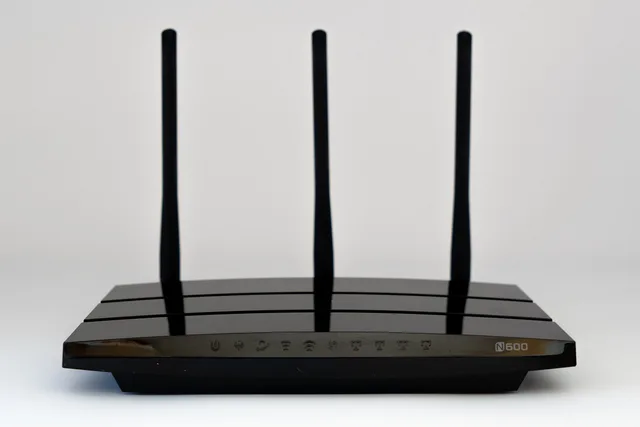
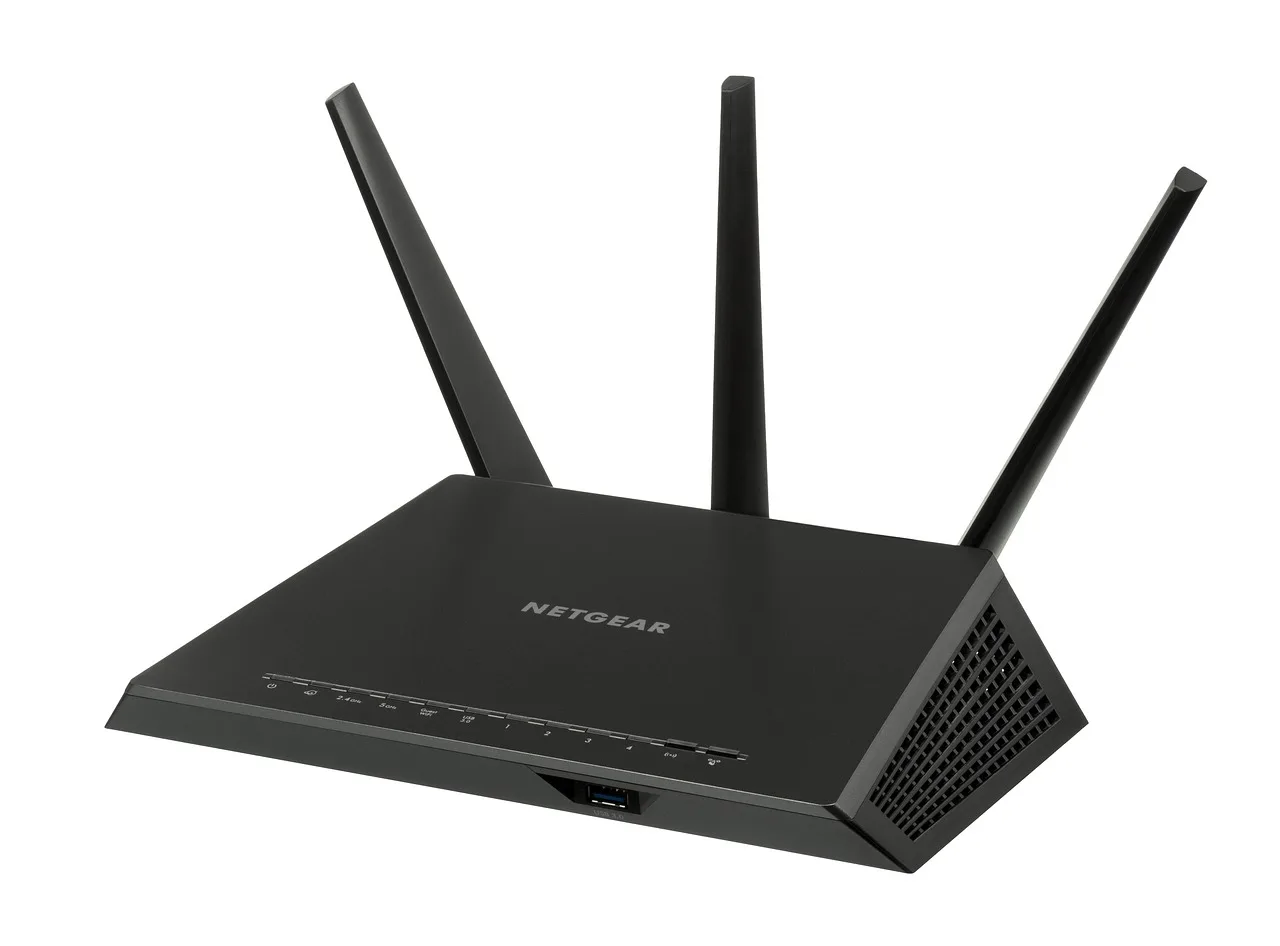
The thing that arrives is a box. It has a slot for a SIM, a few network ports, and a power lead. Plug it in, wait a minute, and an office has an internet connection with nobody having dug anything up or asked a landlord for permission.
That is the appeal, and it is real. What the box does not tell you is that the connection it provides is a share of something outside the building, and how good your share is depends on four things you cannot see from the desk.
What to take away
- You are buying a share of a cell, not a line. Signal strength at your antenna, how busy that cell is, what sits behind it, and the words in your plan decide the result, in that order of how often they are the problem.
- Where the antenna ends up matters more than which box you buy. Plan the antenna position before you plan anything else.
- It is at its best as a bridge, a second path, or the only option at a site no cable reaches. It is at its worst when sold as a drop-in replacement for a wired circuit without a trial at your own address.
What is in the box, and what is not
The box is a router with a cellular modem. Everything else in the chain
What you control vs provider
You control
- The box
- Yes
- Antenna position
- Yes
- The mast
- No
- Mast equipment
- No
- Backhaul link
- No
- Internet connection
- No
Provider controls
- The box
- No
- Antenna position
- No
- The mast
- Yes
- Mast equipment
- Yes
- Backhaul link
- Yes
- Internet connection
- Yes
You control the box and where its antenna sits. You control nothing else. That differs from a wired business internet service, where a fault in the line to your building is the provider's to fix, on a clock.
On cellular, the equivalent question is whether the cell serving you performs. You are one of many customers on it, with no clock at all.
Four things decide whether it works at your address
Signal at the antenna. Not signal in the street, not the map, not what a
Four things that decide
- Signal at the exact antenna spot
- How busy the cell is
- What sits behind the mast
- The words in your plan
How busy the cell is. The connection that tests beautifully on a Sunday can behave quite differently on a weekday afternoon. The regulator's own Measuring Broadband America program measures continuously for exactly this reason. There is no way to know this from a single test. You have to measure across the hours you actually work.
What sits behind the mast. Every mast connects back into the provider's network somehow, and that link has its own capacity. A well-covered site can still be slow if the mast serving it is fed by a narrow pipe. You will rarely get a straight answer on this, but the pattern shows up in the same measurements: strong signal, poor throughput at busy times.
The words in your plan. Two customers on the same mast with the same box can get different treatment because their plans say different things.
Whether your traffic can be given lower priority when the cell is busy, whether there is a usage allowance and what happens past it, and whether the service is intended for fixed use at all are all matters of contract.
Read them, and ask the sales contact to point at the clause. Put three questions in writing. Ask: "Is my traffic deprioritised when the cell is busy?" Ask: "Is there a usage cap, and what happens when I pass it?" Ask: "Does the plan include a fixed public IP address, and what does it cost?"
For turning your own activities into a target before that conversation, the regulator's broadband speed guide is a reasonable starting point.
The antenna decides more than the box does
If the signal at the desk is marginal, the fix is almost never a different
router. It is moving the antenna.
Options, roughly in order of cost:
Move the box to a window on the side of the building facing the mast, since a few meters can change the result completely.
Use a box that accepts an external antenna and mount that antenna at the window or on an outside wall. Put the antenna, or the whole unit, on the roof and run a cable down.
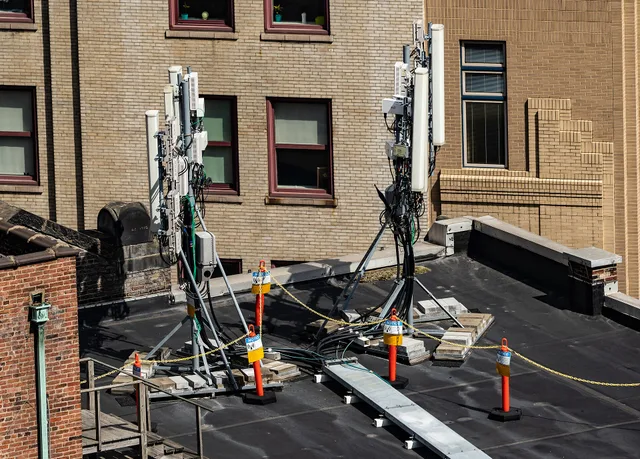
Roof mounting turns a plug-in purchase into a small installation: landlord consent, access, cable entry, weatherproofing, and someone competent at height.
It is still faster than a civil engineering job, but not nothing. Know in advance whether your building will make that necessary. Test at the window first. If the window is not good enough, get a survey with a proper meter rather than guessing.
To find the mast that serves you, check the provider's coverage map for your address, then confirm the signal with a survey meter or the box's own readout.
Getting traffic back in
Most cellular services give your connection no address the wider internet can reach directly. For a business that only browses, emails and uses hosted software, that is invisible.
Do you need incoming connections?
Does anything outside need to reach your site?
Ask for a fixed, reachable address
Browsing, email and hosted software work fine
For anything that must accept an incoming connection, it is a hard stop. That includes an on-site phone system, a camera recorder, a server, or some remote-access arrangements.
Some providers offer a fixed, reachable address as an option. Ask if your quoted plan has it, what it costs in the plan's terms, and if it changes priority or allowance rules.
If not, you can often have on-site equipment call out to a service elsewhere instead of waiting to be called. That is a design change worth knowing before you order.
Three jobs it does well
The bridge. A wired build to a new office can take months, and a lease
Three jobs it does well
The bridge
- When
- Wired build delayed
- Role
- Live day one
- Watch out
- Stop paying when wire arrives
The second path
- When
- Wired line cut
- Role
- Automatic fallback
- Watch out
- Calls drop on failover
The only option
- When
- No wired option
- Role
- Primary connection
- Watch out
- Trial answers it
Typical business cellular terms run 12 to 36 months, so ask for month-to-month or a 12-month term with a written exit. Ask what the early termination fee is and whether it falls as the term runs.
The second path. The most useful property of a cellular connection is that it shares nothing physical with a cable into the building. A dig that severs your wired line does not touch it. Set up as an automatic fallback, it turns a day-long outage into a slower afternoon. Set it up, then trigger the failover deliberately and watch what breaks, because calls in progress usually do and some software takes a while to notice the change.
The only option. Rural sites, temporary premises, sites on land you do not control, and anywhere the cost of a physical build cannot be justified. Here the question is not whether cellular is as good as a wire but whether it is good enough for what the site does, and a trial answers that.
Run a trial before you sign anything long
Get a unit on a short or cancellable arrangement. Put it where the antenna
will really live. Then, for at least a week:
Run a trial before signing
- Get a short or cancellable unit
- Put it where the antenna will live
- Measure at busy times daily for a week
- Make real calls during the busiest hour
- Move it once or twice and repeat
- Test anything reaching you from outside
- Measure at the busy hours. Run a speed and latency test at 9am, 1pm, and 4pm on weekdays, and keep every result.
- Test the failover. Pull the wired connection and time how long the cellular path takes over, then note what breaks.
- Check reachability. From outside the office, try to reach anything on site that must accept an incoming connection.
- Record the worst hour. Keep the worst result of the week, not the best, and compare it with your working targets.
For a small office, a typical working target is 25 to 50 Mbps down and 5 to 10 Mbps up at the busy hour.
If the results are acceptable at the worst hour, you have something. If they are only acceptable at the best hour, you have a bridge or a backup, not a primary.
Common questions
Is a cellular connection a proper business service?
It can be, if the plan is sold as one and the contract attaches a fault process and a remedy to it. Many are consumer plans in a business-shaped box. The label tells you nothing; the terms do.
Why is it fast at night and slow in the afternoon?
The afternoon is the busiest time on most cells. This is the normal behavior of the medium, not a fault, and it is the main reason to measure over time rather than once.
Can I run my phone system over it?
Yes for a small number of calls if the connection is stable at the busy hour, with the reachability caveat above if the phone system sits on your premises.
For voice, a common target is one-way latency under 150 ms, jitter under 30 ms, and packet loss under 1 percent.
Confirm with the phone provider how emergency calls are handled on their service and what address they hold, since that is set by them and not by the connection.
What happens in a power cut?
The box stops, like any router. A small battery unit will keep it running for a while, and unlike a wired service the mast is not on your power, so it usually keeps working as long as the provider's side has power. That makes it a better fallback than most.
In this guide
- Best 5G business internet software 2027: guide and criteria, explained properlyThe best 5G business internet software in 2027 spans managed routers, SIM management, SD-WAN overlays and monitoring tools, chosen against your own trial.
- 5g business internet features worth understanding5G business internet features that matter: modem or router, antenna connectors, band and plan wording, failover logic, a reachable address, alerts and power.
- 4 takeaways on 5g business internet troubleshooting5G business internet troubleshooting: check 5G radio readings, cell congestion, CGNAT, and power resilience before calling your provider.
- 5G Business Internet: What the Radio Link Changes5g business internet comparison depends on your address: shared capacity, changing signal, delay and inbound access can differ from wired service.