Features
Part of Straight talk about business internet, without the sales pitch
5G Business Internet: What the Radio Link Changes
5g business internet comparison depends on your address: shared capacity, changing signal, delay and inbound access can differ from wired service.
When the last stretch of a connection is a cable, the thing carrying your traffic is fixed. It was surveyed, it was built, and unless somebody digs it up it will behave tomorrow roughly as it behaves today.
When the last stretch is radio on a 5G business internet connection, that stops being true. The path changes from month to month, and weather, buildings and new obstacles shape it. That is the variable you are really comparing, and it never appears on the order form.
What to take away
- Compare the service at your own address, on a wired device, over at least two weeks.
- Log delay and its variation, not just the top download number.
- Ask about a static public address and inbound reachability before you order.
- Price mounting, the static address and the exit terms alongside the monthly fee.
- Use it first as a bridge or a second path, and as the only connection only if you can live with a bad hour you cannot explain.
What actually changes when the last hop is radio
Your neighbors are not on your street. With a wired service you share
Wired vs radio last hop
Wired line
- Shared with
- premises nearby
- Congestion source
- local street
- Signal stability
- constant
- Delay
- steady
- Voice calls
- predictable
5G radio
- Shared with
- whole cell
- Congestion source
- stadium, road, event
- Signal stability
- changes with season
- Delay
- variable
- Voice calls
- can sound poor
capacity with the premises around you. On a mobile network you share it with everyone the same cell is serving, which can include a station, a stadium, a main road at rush hour, or an event that was not there last week.
Congestion arrives from outside your line of sight. That sharing is a property of 5G business internet as an access type, not the fault of one provider.
The signal is not a constant. Distance is only part of it. What sits between you and the mast matters more: buildings, scaffolding, a delivery vehicle parked where it was not before, trees that are bare in winter and dense in summer. A service that was fine when it was installed in February is a different service in July, and nothing was changed by anyone.
Delay behaves differently. Radio access adds its own variability on top of whatever the rest of the path contributes. For bulk downloads this is invisible. For live calls it is exactly the property that decides whether they sound natural, so a service that looks generous on capacity can still be a poor carrier of voice.
Why published comparisons miss your address
Published figures for a mobile-network service and a wired one rarely compare meaningfully, because each uses different assumptions.
How to test your address
- Test at your own address
- Test across busy workday hours
- Use a wired device, not Wi-Fi
- Repeat over several days
- Log delay and its variation
The wider business internet comparison hits the same wall: a published number describes a test bench, not your building.
Typical ranges put 5G fixed wireless near 20 to 50 ms of round-trip delay and 50 to 300 Mbps downstream. A business fiber line usually sits at 5 to 20 ms and whatever speed you bought. Both are typical figures, and your building can fall outside them.
Same address, different hours
5G fixed wireless, typical
- Monthly service
- $50 to $90
- Hardware and mounting
- gateway included; professional mounting commonly $100 to $500
- Static address
- usually an add-on, roughly $10 to $20 a month
- Round-trip delay
- 20 to 50 ms
- Download
- 50 to 300 Mbps
Wired business line, typical
- Monthly service
- $100 to $300 for 100 to 500 Mbps
- Hardware and mounting
- $0, or a build charge that can run into the thousands
- Static address
- often included
- Round-trip delay
- 5 to 20 ms on fiber
- Download
- the speed you buy, 100 Mbps to 1 Gbps
These are list prices, not quotes. Your address, the term, and whether the building is already wired decide the real number. The 5G figure usually looks smaller until you add mounting, a static address and the cost of leaving early.
The only useful comparison is measurement at your own address across a realistic spread of hours. Test during the busy part of your workday, not a quiet mid-morning.
Use a wired device, not a laptop on Wi-Fi, so you measure the service and not your office radio. Test over several days with a tool that logs the readings, such as Ookla Speedtest or the FCC Speed Test app. One good afternoon proves nothing about the next one.
Log delay and its variation, not just throughput.
Addressing and getting traffic back in
Services on mobile networks often sit behind carrier-grade address translation, where many customers share one public address. Outbound browsing works normally. Inbound connections never arrive.
Do you need inbound traffic?
Do you need inbound connections?
ask about static address and reachability
outbound browsing works normally
If you must reach a machine at the office from outside, terminate a site-to-site tunnel, run anything that accepts connections, or be recognized by a supplier's address allow-list, that arrangement will block you.
Ask two separate questions, because they have two separate answers: is a static public address available, and does inbound traffic reach it. Get the answer before you order, not during the first attempt to work remotely.
Where it fits
As a bridge. Radio-based service can often
Three ways to use it
Bridge
- Strength
- live in days
- Risk
- temporary fix
- Check
- permanent build date
Second path
- Strength
- different failure modes
- Risk
- untested failover
- Check
- automatic switch, drops
Only connection
- Strength
- simple setup
- Risk
- unexplained bad hour
- Check
- tolerate shared radio
be working in days rather than the weeks or months a physical build can take. If you are moving premises and the permanent connection will not be ready, it buys you a functioning office instead of a closed one. Fixed wireless with an aimed antenna fills the same gap, and it is worth pricing at the same time.
As a second path. A cable cut does not affect a radio path. But check what the failover actually does: whether the switch is automatic, how long it takes, what drops during it, calls in progress usually do, and how you would know it had happened. Failover nobody has ever deliberately triggered is an assumption.
As the only connection. Reasonable for some businesses and a bad idea for others. The question is not whether it is fast enough. It is whether you can tolerate a bad hour you cannot explain or fix.
Questions worth asking before you commit
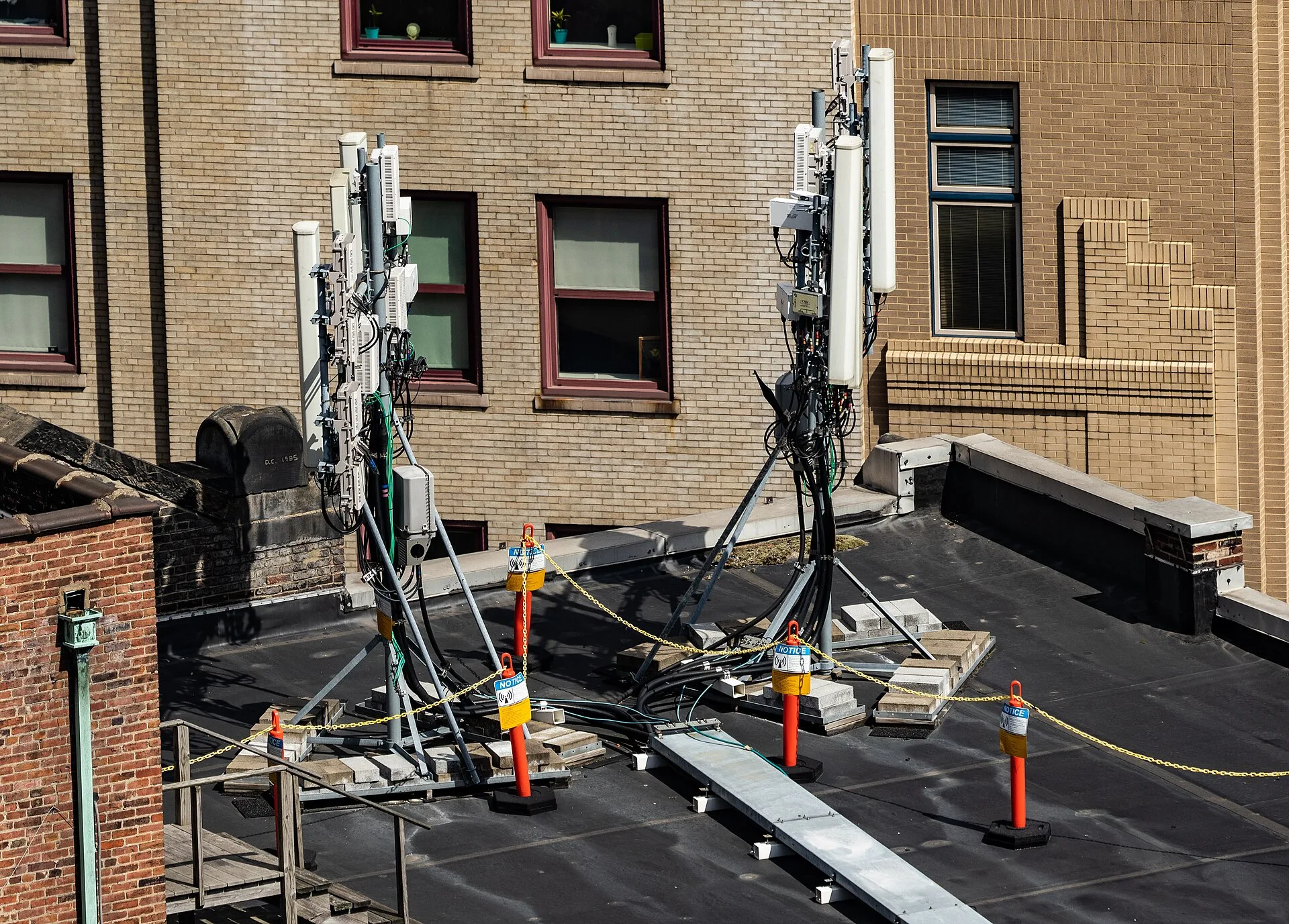
- Where is the antenna going, who mounts it, and who is responsible when it needs re-aiming later?
Ask before you commit
- Who mounts and re-aims the antenna?
- Is external mounting included?
- Fair-use policy and throttling?
- Static address and inbound reach?
- Are delay and loss covered?
- Minimum term and exit cost?
- Trial or return window?
That last one matters more here than anywhere else. The service is only as good as the radio path to your specific building. Nobody can tell you what that path is like from an office. Put the equipment on the wall and watch it for a while.
A single test proves nothing about a shared cell, which is why the regulator's Measuring Broadband America program measures continuously instead. Do the same for two weeks before you sign anything.
Once a service reaches your shortlist, work through what the plan and the hardware actually give you: 5g business internet features sets those out one at a time.
Common questions
Can a radio last hop ever match a wired one?
For capacity, sometimes. For consistency, rarely.
Is a shared public address a deal breaker?
It is if anything has to reach you from outside. Ask for a real address, or choose services that connect outward rather than waiting to be reached.
How long should the trial be?
Two weeks, covering your peak. Anything shorter tends to flatter the service.
Does the antenna position really matter that much?
More than any setting in the router. Treat the first position as a hypothesis and log the readings for each alternative.